This article is one of our favourites from around the web. We've included an excerpt below but do go and read the original!
If you've ever wished you could predict when your equipment will break down before it actually happens, you're thinking about predictive maintenance. It sounds like science fiction, but it's becoming standard practice for organisations serious about keeping their operations running smoothly. Let's break down what predictive maintenance actually is and why it matters - without the technical jargon.
Think of predictive maintenance like a doctor monitoring your health. Just as regular check-ups and blood tests can predict health problems before you feel sick, predictive maintenance monitors your equipment to spot problems before they cause breakdowns.
Traditional maintenance works in one of two ways: you either wait until something breaks (reactive maintenance) or you service equipment on a fixed schedule regardless of whether it needs it (preventive maintenance). Predictive maintenance is smarter - it tells you when equipment actually needs attention based on its real condition.
The numbers tell a compelling story. Organisations using predictive maintenance see some impressive results:
More importantly, predictive maintenance prevents the nightmare scenario every operations manager dreads: critical equipment failing during peak production, costing thousands of pounds per hour in lost output.
The process is simpler than you might think:
Step 1: Sensors monitor your equipment - Your machinery gets fitted with sensors that track things like temperature, vibration, oil quality, or sound. These sensors continuously collect data about how your equipment is performing.
Step 2: Software analyses the data - All that sensor data feeds into software that looks for patterns and warning signs. The software compares current conditions to normal operating conditions and historical failure patterns.
Step 3: You get alerts before problems occur - When the system spots something wrong - maybe a bearing is vibrating more than usual or a motor is running hotter than normal - it alerts your maintenance team, often days or weeks before an actual failure would occur.
Step 4: You fix issues on your schedule - Instead of scrambling to repair equipment that's already broken down, you schedule maintenance during planned downtime. You order the right parts, assign the right technicians, and fix the problem before it impacts production.
You don't need to transform your entire operation overnight. Here's a practical approach:
Pick one or two critical machines: Start with equipment that costs you the most when it breaks down. Maybe it's your production line's main conveyor or a critical pump. Prove the concept works before expanding.
Install the right sensors: Your equipment needs sensors appropriate for what you're monitoring. Vibration sensors for rotating equipment, temperature sensors for motors, pressure sensors for hydraulic systems.
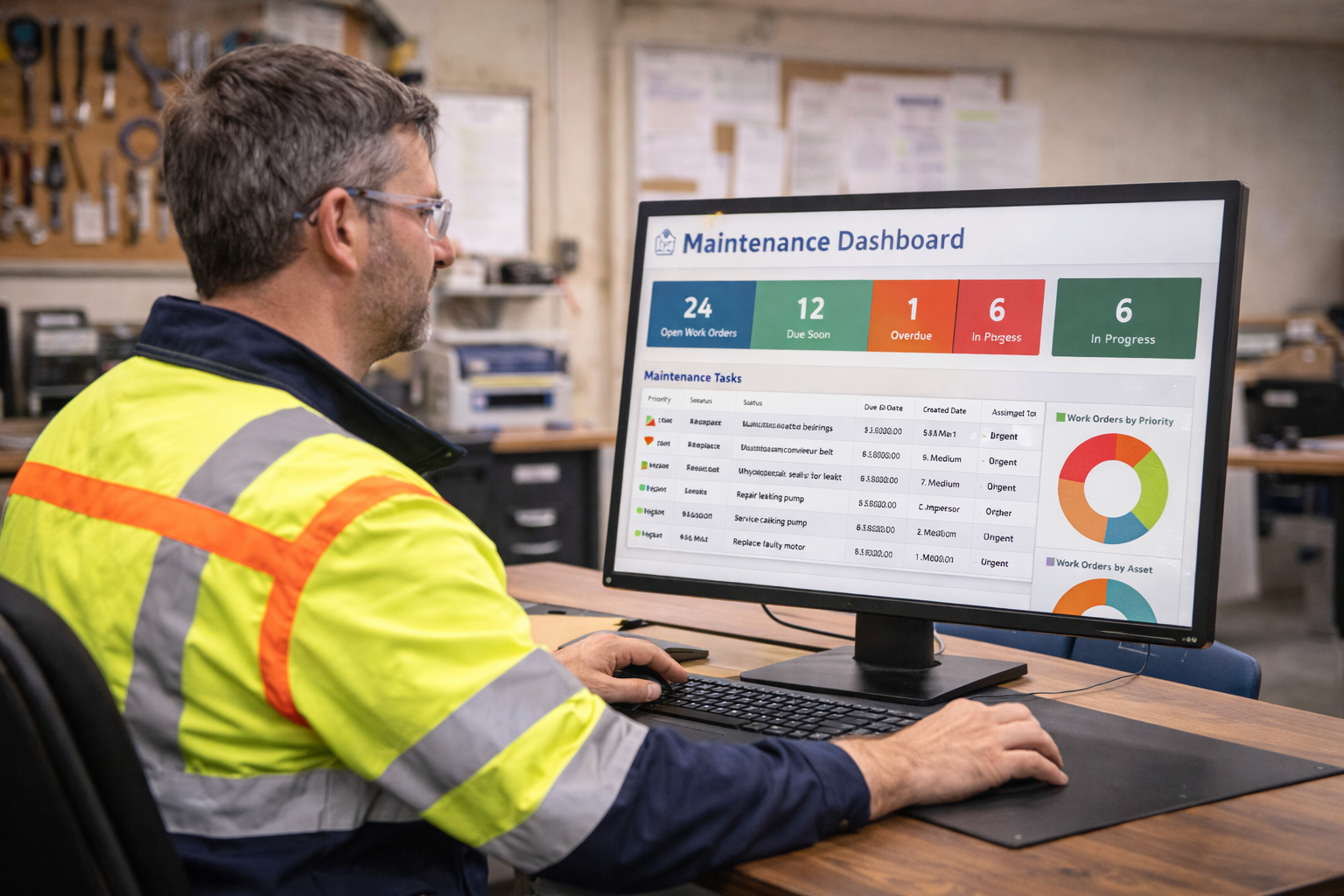
Choose predictive maintenance software: You need a platform that collects sensor data, analyses it, and alerts you to problems. Many modern work management platforms now include predictive capabilities.
Train your team: Your maintenance technicians need to understand how to respond to predictive alerts and trust the system's recommendations.
Predictive maintenance makes the most sense when:
It's less critical when your equipment is inexpensive to replace, failures don't significantly impact operations, or you're already achieving excellent reliability with preventive maintenance.
Predictive maintenance isn't about replacing your maintenance team with robots or requiring advanced degrees to keep equipment running. It's about giving your team better information so they can work smarter, not harder.
The technology monitors equipment continuously, spots problems early, and alerts your team before failures occur. Your technicians then do what they do best, fix problems, but on their schedule rather than in crisis mode.
With the predictive maintenance market projected to grow from $10.93 billion in 2024 to $70.73 billion by 2032, this approach is rapidly becoming the standard rather than the exception. The question isn't whether predictive maintenance works - 95% of adopters report positive ROI - but whether you can afford to keep operating without it.
Start small, prove the value with one or two critical assets, and expand from there. Your future self, your maintenance team, and your bottom line will thank you.
HINDSITE's work management platform that ensures the right job gets done, every time. Connect with our team today.
If you've ever wished you could predict when your equipment will break down before it actually happens, you're thinking about predictive maintenance. It sounds like science fiction, but it's becoming standard practice for organisations serious about keeping their operations running smoothly. Let's break down what predictive maintenance actually is and why it matters - without the technical jargon.
Think of predictive maintenance like a doctor monitoring your health. Just as regular check-ups and blood tests can predict health problems before you feel sick, predictive maintenance monitors your equipment to spot problems before they cause breakdowns.
Traditional maintenance works in one of two ways: you either wait until something breaks (reactive maintenance) or you service equipment on a fixed schedule regardless of whether it needs it (preventive maintenance). Predictive maintenance is smarter - it tells you when equipment actually needs attention based on its real condition.
The numbers tell a compelling story. Organisations using predictive maintenance see some impressive results:
More importantly, predictive maintenance prevents the nightmare scenario every operations manager dreads: critical equipment failing during peak production, costing thousands of pounds per hour in lost output.
The process is simpler than you might think:
Step 1: Sensors monitor your equipment - Your machinery gets fitted with sensors that track things like temperature, vibration, oil quality, or sound. These sensors continuously collect data about how your equipment is performing.
Step 2: Software analyses the data - All that sensor data feeds into software that looks for patterns and warning signs. The software compares current conditions to normal operating conditions and historical failure patterns.
Step 3: You get alerts before problems occur - When the system spots something wrong - maybe a bearing is vibrating more than usual or a motor is running hotter than normal - it alerts your maintenance team, often days or weeks before an actual failure would occur.
Step 4: You fix issues on your schedule - Instead of scrambling to repair equipment that's already broken down, you schedule maintenance during planned downtime. You order the right parts, assign the right technicians, and fix the problem before it impacts production.
You don't need to transform your entire operation overnight. Here's a practical approach:
Pick one or two critical machines: Start with equipment that costs you the most when it breaks down. Maybe it's your production line's main conveyor or a critical pump. Prove the concept works before expanding.
Install the right sensors: Your equipment needs sensors appropriate for what you're monitoring. Vibration sensors for rotating equipment, temperature sensors for motors, pressure sensors for hydraulic systems.
Choose predictive maintenance software: You need a platform that collects sensor data, analyses it, and alerts you to problems. Many modern work management platforms now include predictive capabilities.
Train your team: Your maintenance technicians need to understand how to respond to predictive alerts and trust the system's recommendations.
Predictive maintenance makes the most sense when:
It's less critical when your equipment is inexpensive to replace, failures don't significantly impact operations, or you're already achieving excellent reliability with preventive maintenance.
Predictive maintenance isn't about replacing your maintenance team with robots or requiring advanced degrees to keep equipment running. It's about giving your team better information so they can work smarter, not harder.
The technology monitors equipment continuously, spots problems early, and alerts your team before failures occur. Your technicians then do what they do best, fix problems, but on their schedule rather than in crisis mode.
With the predictive maintenance market projected to grow from $10.93 billion in 2024 to $70.73 billion by 2032, this approach is rapidly becoming the standard rather than the exception. The question isn't whether predictive maintenance works - 95% of adopters report positive ROI - but whether you can afford to keep operating without it.
Start small, prove the value with one or two critical assets, and expand from there. Your future self, your maintenance team, and your bottom line will thank you.


.png)
.png)