This article is one of our favourites from around the web. We've included an excerpt below but do go and read the original!
Growth is exhilarating for any organisation, but it brings unique challenges for maintenance operations. As your asset base expands, facilities multiply, and production demands increase, your maintenance strategy must evolve in tandem. The stakes are high: 45% of maintenance leaders cite lack of resources as their primary obstacle, whilst ageing infrastructure and skilled labour shortages compound the difficulty. Yet organisations that successfully scale their maintenance operations don't just survive growth - they thrive through it. Here's how to build maintenance operations that can keep pace with your ambitions.
Before embarking on a scaling journey, conduct an honest assessment of your current state. 67% of managers believe ageing equipment is their main future challenge, making it critical to evaluate not just your processes, but the condition and capacity of your existing asset base. Document current workflows, identify bottlenecks, and establish baseline metrics for performance. Consider whether you're adding similar facilities that can replicate existing processes, or diversifying into new operational areas requiring different maintenance approaches.
Inconsistency is the enemy of scale. Inefficient maintenance processes lead to organisations losing around 30% of time annually, a loss that compounds dramatically as operations expand. Create comprehensive standard operating procedures that capture best practices from your most effective teams, covering everything from routine inspections to emergency response protocols. Standardisation enables efficient onboarding, systematic knowledge transfer, and consistent performance measurement across locations.
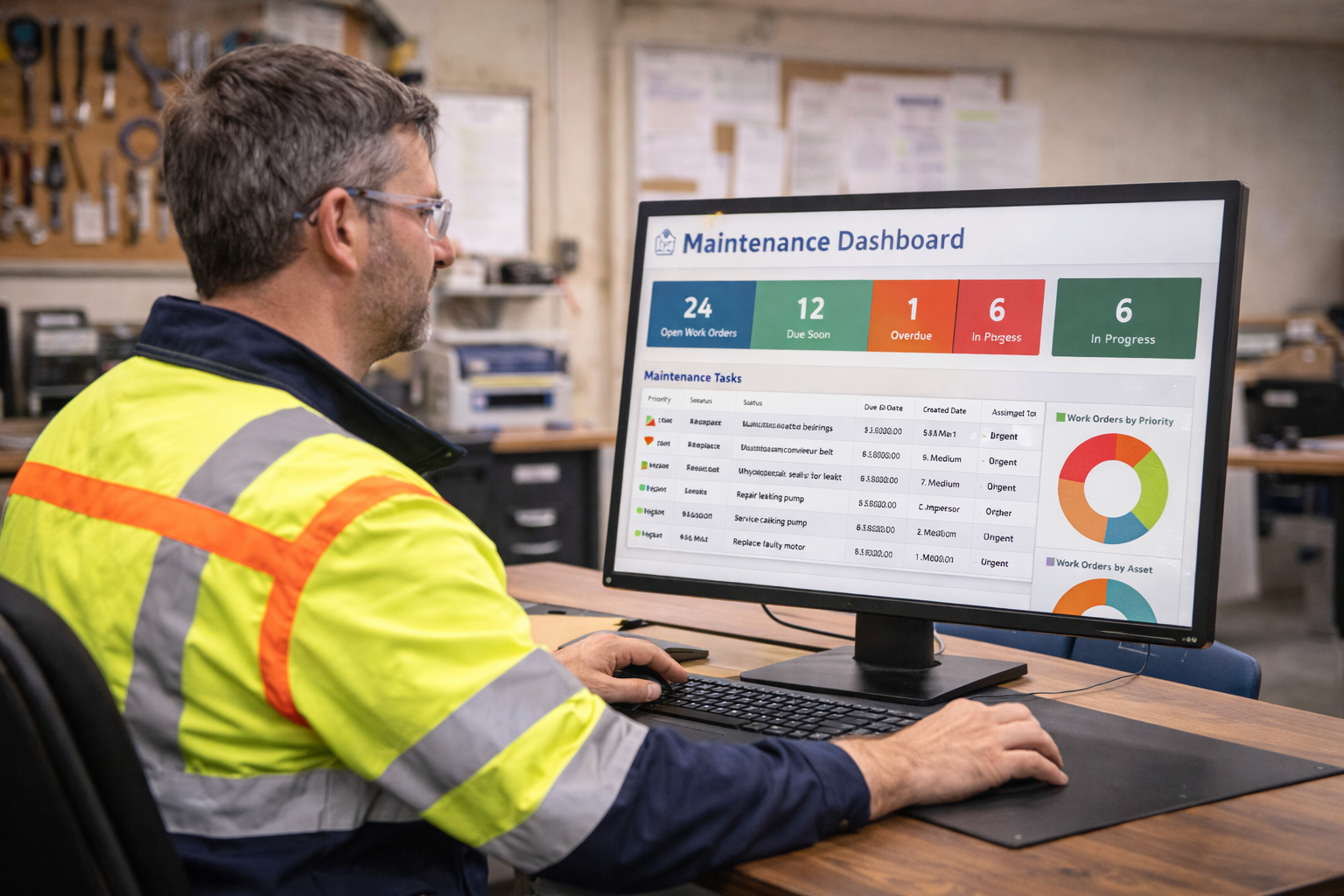
Technology isn't optional for organisations serious about scaling. Digitising maintenance operations can cut costs by approximately 15-30%, whilst improving visibility and control across expanding operations. Work management platforms provide real-time visibility into asset health, work order status, and resource allocation across multiple locations. Mobile capabilities ensure technicians have instant access to procedures, asset histories, and documentation regardless of location. Predictive analytics help anticipate maintenance needs across a growing asset base, whilst automated scheduling optimises resources even as complexity increases.
With almost half the manufacturing workforce set to retire by 2030, workforce development strategies are urgent. Implement mentorship programmes pairing experienced technicians with newer team members, accelerating skill development whilst capturing institutional knowledge. Businesses focusing on skill development are 2.4 times more likely to succeed in transformational initiatives. Create clear career pathways, use skills matrices to identify capability gaps, and develop cross-training initiatives to ensure adequate coverage whilst increasing engagement and retention.
35% of plants use sensors extensively and another 41% are testing them, recognising that data provides insights needed for informed decisions at scale. Establish clear key performance indicators aligned with your scaling objectives, tracking metrics like mean time between failures, maintenance cost per asset, and preventive maintenance compliance. Use analytics to identify patterns: which equipment models require the most maintenance? Which sites demonstrate best practices worth replicating? Where are your biggest opportunities for improvement?
Scaling amplifies supply chain vulnerabilities. More maintenance professionals are diversifying their supplier base to overcome supply chain challenges. Develop strategic relationships with multiple suppliers who can support your growth trajectory. Implement smart inventory management balancing carrying costs against stockout risks across multiple locations. Consider centralising inventory for common parts whilst maintaining site-specific stock for critical items. Regular supplier performance reviews become essential, evaluating capacity to grow with you, financial stability, and responsiveness during urgent situations.
Open communication increases transformation success. Create feedback loops capturing insights from frontline technicians, supervisors, and stakeholders. Encourage teams to identify inefficiencies and propose solutions - small improvements compound dramatically across scaled operations. Establish regular review cycles to assess process effectiveness, celebrate successes, and address challenges before they become entrenched. Benchmark your performance against industry standards to accelerate progress and avoid common pitfalls.
Scaling maintenance operations successfully requires a holistic approach addressing people, processes, and technology in tandem. By standardising processes, leveraging technology, developing your workforce, embracing data-driven decision making, building supply chain resilience, and fostering continuous improvement, you create maintenance operations that don't just accommodate growth but enable it. The investment in scaling properly pays dividends through reduced downtime, improved asset reliability, and the operational capacity to pursue new opportunities confidently. In today's competitive environment, maintenance excellence isn't just about keeping equipment running - it's about building the foundation for sustained organisational success.
HINDSITE's work management platform that ensures the right job gets done, every time. Connect with our team today.
Growth is exhilarating for any organisation, but it brings unique challenges for maintenance operations. As your asset base expands, facilities multiply, and production demands increase, your maintenance strategy must evolve in tandem. The stakes are high: 45% of maintenance leaders cite lack of resources as their primary obstacle, whilst ageing infrastructure and skilled labour shortages compound the difficulty. Yet organisations that successfully scale their maintenance operations don't just survive growth - they thrive through it. Here's how to build maintenance operations that can keep pace with your ambitions.
Before embarking on a scaling journey, conduct an honest assessment of your current state. 67% of managers believe ageing equipment is their main future challenge, making it critical to evaluate not just your processes, but the condition and capacity of your existing asset base. Document current workflows, identify bottlenecks, and establish baseline metrics for performance. Consider whether you're adding similar facilities that can replicate existing processes, or diversifying into new operational areas requiring different maintenance approaches.
Inconsistency is the enemy of scale. Inefficient maintenance processes lead to organisations losing around 30% of time annually, a loss that compounds dramatically as operations expand. Create comprehensive standard operating procedures that capture best practices from your most effective teams, covering everything from routine inspections to emergency response protocols. Standardisation enables efficient onboarding, systematic knowledge transfer, and consistent performance measurement across locations.
Technology isn't optional for organisations serious about scaling. Digitising maintenance operations can cut costs by approximately 15-30%, whilst improving visibility and control across expanding operations. Work management platforms provide real-time visibility into asset health, work order status, and resource allocation across multiple locations. Mobile capabilities ensure technicians have instant access to procedures, asset histories, and documentation regardless of location. Predictive analytics help anticipate maintenance needs across a growing asset base, whilst automated scheduling optimises resources even as complexity increases.
With almost half the manufacturing workforce set to retire by 2030, workforce development strategies are urgent. Implement mentorship programmes pairing experienced technicians with newer team members, accelerating skill development whilst capturing institutional knowledge. Businesses focusing on skill development are 2.4 times more likely to succeed in transformational initiatives. Create clear career pathways, use skills matrices to identify capability gaps, and develop cross-training initiatives to ensure adequate coverage whilst increasing engagement and retention.
35% of plants use sensors extensively and another 41% are testing them, recognising that data provides insights needed for informed decisions at scale. Establish clear key performance indicators aligned with your scaling objectives, tracking metrics like mean time between failures, maintenance cost per asset, and preventive maintenance compliance. Use analytics to identify patterns: which equipment models require the most maintenance? Which sites demonstrate best practices worth replicating? Where are your biggest opportunities for improvement?
Scaling amplifies supply chain vulnerabilities. More maintenance professionals are diversifying their supplier base to overcome supply chain challenges. Develop strategic relationships with multiple suppliers who can support your growth trajectory. Implement smart inventory management balancing carrying costs against stockout risks across multiple locations. Consider centralising inventory for common parts whilst maintaining site-specific stock for critical items. Regular supplier performance reviews become essential, evaluating capacity to grow with you, financial stability, and responsiveness during urgent situations.
Open communication increases transformation success. Create feedback loops capturing insights from frontline technicians, supervisors, and stakeholders. Encourage teams to identify inefficiencies and propose solutions - small improvements compound dramatically across scaled operations. Establish regular review cycles to assess process effectiveness, celebrate successes, and address challenges before they become entrenched. Benchmark your performance against industry standards to accelerate progress and avoid common pitfalls.
Scaling maintenance operations successfully requires a holistic approach addressing people, processes, and technology in tandem. By standardising processes, leveraging technology, developing your workforce, embracing data-driven decision making, building supply chain resilience, and fostering continuous improvement, you create maintenance operations that don't just accommodate growth but enable it. The investment in scaling properly pays dividends through reduced downtime, improved asset reliability, and the operational capacity to pursue new opportunities confidently. In today's competitive environment, maintenance excellence isn't just about keeping equipment running - it's about building the foundation for sustained organisational success.


.png)