This article is one of our favourites from around the web. We've included an excerpt below but do go and read the original!
Most teams say they want to improve continuously.
Very few have a reliable way to learn from the work as it actually happens.
In manufacturing, maintenance, and field operations, improvement often relies on memory, conversations, and best guesses. The people closest to the work know where things break down — but those insights are hard to capture, share, and act on consistently.
The most effective teams don’t start with systems.
They start with better feedback, closer to the work.
Long before digital tools enter the picture, many teams build strong improvement habits through simple, practical actions.
Instead of large post-mortems, teams hold quick debriefs after a job:
These conversations surface real issues while they’re still fresh.
Asking someone to show how a step is performed often reveals:
These observations highlight the gap between how work is written and how it’s actually done.
Rather than documenting everything, high-performing teams focus on:
Consistency here delivers disproportionate impact.
Issues are easiest to fix when they occur.
Whiteboards, notebooks, or toolbox talks are often used to record:
The key is timing - not waiting until the details are forgotten.
These approaches work - but only up to a point.
As teams scale, sites multiply, and jobs become more complex:
This is where many organisations stall, not because they lack intent, but because they lack visibility.
The goal of digital improvement isn’t more data.
It’s better feedback, captured at the right moment.
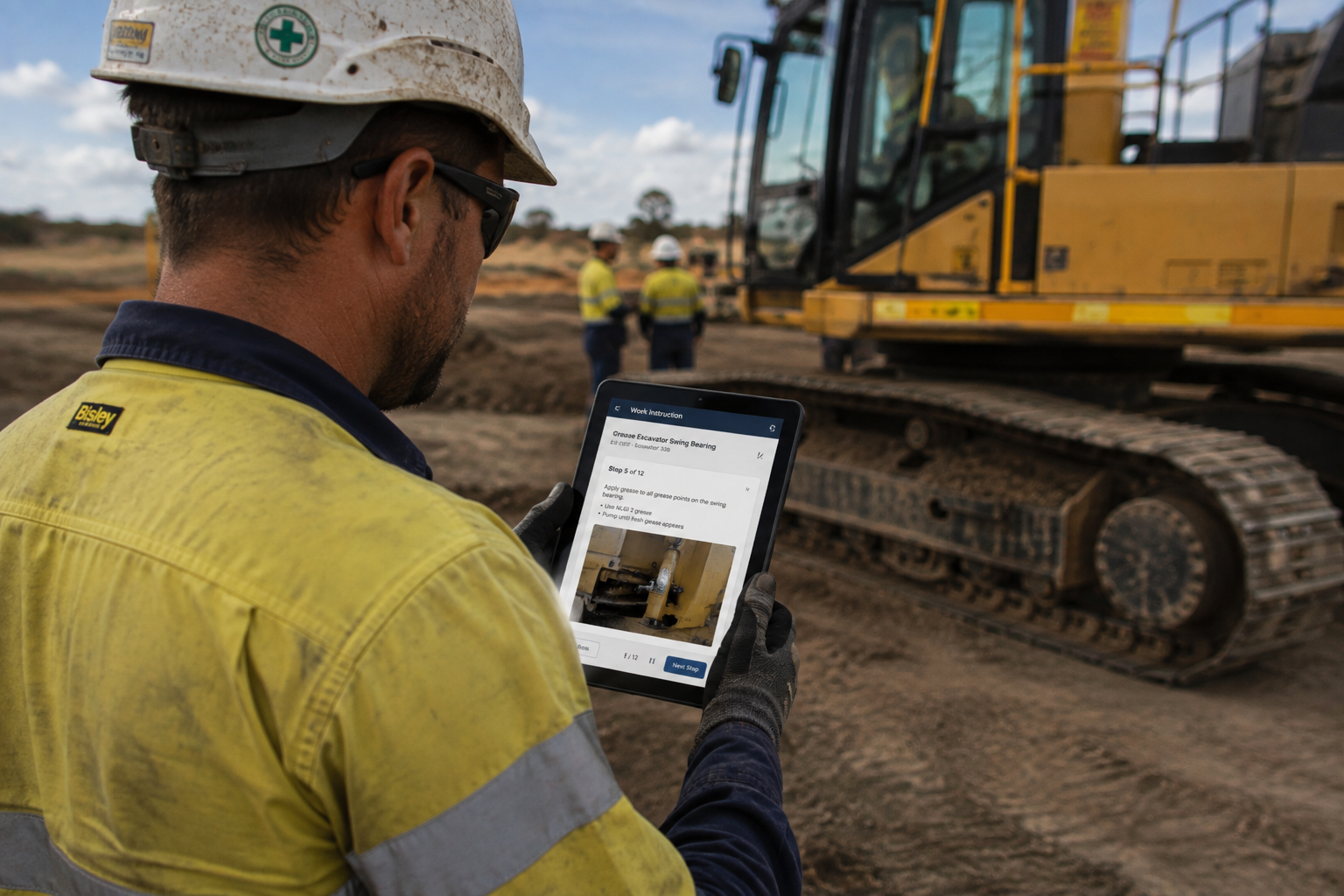
Digital tools take the same questions teams already ask in job reviews and embed them directly into the work itself:
Because feedback is tied to the exact step being performed, it’s:
Instead of relying on memory after the job, insight is captured while the work is happening - when it’s most accurate.
When step-level feedback is captured consistently, teams can:
This is where digital platforms like HINDSITE help teams move from good improvement habits to repeatable, scalable improvement - by capturing execution, feedback, and proof of work as part of doing the job, not after it.
Processes stop being static documents and become living assets that evolve as conditions change.
The strongest improvement cultures don’t rely on big initiatives.
They:
Whether improvement begins on a whiteboard or in a digital workflow, the principle is the same:
Improve based on what actually happens - not what we assume happens.
HINDSITE's work management platform that ensures the right job gets done, every time. Connect with our team today.
Most teams say they want to improve continuously.
Very few have a reliable way to learn from the work as it actually happens.
In manufacturing, maintenance, and field operations, improvement often relies on memory, conversations, and best guesses. The people closest to the work know where things break down — but those insights are hard to capture, share, and act on consistently.
The most effective teams don’t start with systems.
They start with better feedback, closer to the work.
Long before digital tools enter the picture, many teams build strong improvement habits through simple, practical actions.
Instead of large post-mortems, teams hold quick debriefs after a job:
These conversations surface real issues while they’re still fresh.
Asking someone to show how a step is performed often reveals:
These observations highlight the gap between how work is written and how it’s actually done.
Rather than documenting everything, high-performing teams focus on:
Consistency here delivers disproportionate impact.
Issues are easiest to fix when they occur.
Whiteboards, notebooks, or toolbox talks are often used to record:
The key is timing - not waiting until the details are forgotten.
These approaches work - but only up to a point.
As teams scale, sites multiply, and jobs become more complex:
This is where many organisations stall, not because they lack intent, but because they lack visibility.
The goal of digital improvement isn’t more data.
It’s better feedback, captured at the right moment.
Digital tools take the same questions teams already ask in job reviews and embed them directly into the work itself:
Because feedback is tied to the exact step being performed, it’s:
Instead of relying on memory after the job, insight is captured while the work is happening - when it’s most accurate.
When step-level feedback is captured consistently, teams can:
This is where digital platforms like HINDSITE help teams move from good improvement habits to repeatable, scalable improvement - by capturing execution, feedback, and proof of work as part of doing the job, not after it.
Processes stop being static documents and become living assets that evolve as conditions change.
The strongest improvement cultures don’t rely on big initiatives.
They:
Whether improvement begins on a whiteboard or in a digital workflow, the principle is the same:
Improve based on what actually happens - not what we assume happens.