This article is one of our favourites from around the web. We've included an excerpt below but do go and read the original!
Audits rarely fail because work wasn’t done.
They fail because there’s no clear, reliable record of how the work was completed.
In many operational environments, teams are expected to prove compliance long after a unit has been built, shipped, or installed. When records are fragmented across paper checklists, spreadsheets, shared drives, and emails, responding to an audit becomes a manual, high-risk exercise.
Staying audit-ready starts with how build records are created - not with last-minute document collection.
Most audit issues stem from gaps created during execution, not from a lack of effort.
Common breakdowns include:
In practice, this leads to familiar scenarios: an auditor asks when a critical check was completed, a customer requests proof from a specific build stage, or a compliance review flags an approval that no one can trace.
The most reliable way to stay audit-ready is to capture a complete, time-stamped build record as the work is performed, not after it’s finished.
A strong build record typically includes:
When this information is recorded in context, the audit trail is created automatically.
Audit readiness breaks down when traceability depends on people remembering to upload files or complete paperwork later.
Standardised, digital execution helps ensure that:
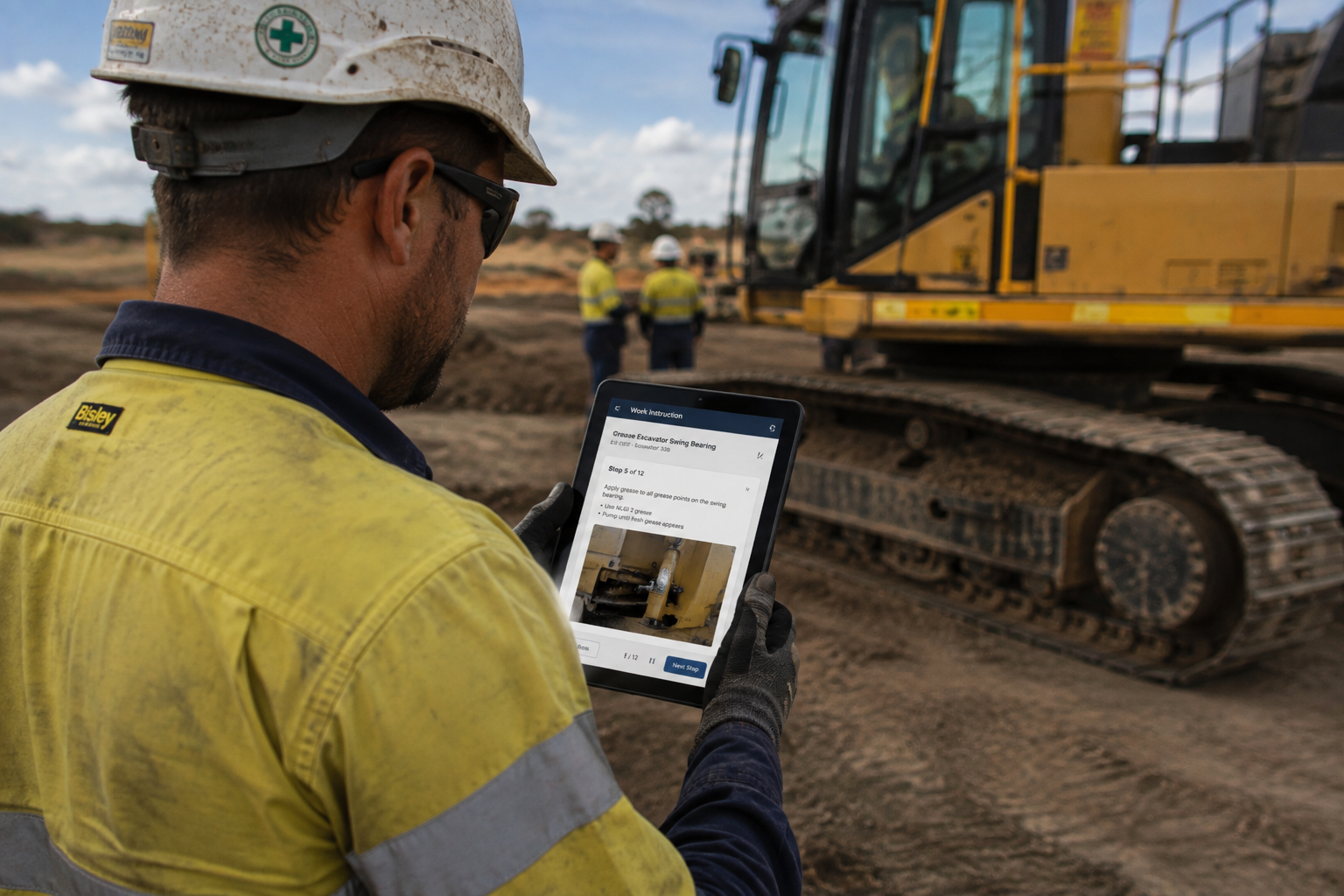
Platforms like HINDSITE support this by embedding traceability directly into day-to-day work, so proof of work is captured naturally as part of execution.
Consider a warranty claim raised months after delivery.
Instead of searching through folders or relying on memory, teams can immediately access the full build history - seeing exactly what was done, when, and by whom, with supporting evidence attached to each step. This level of clarity reduces risk and speeds up responses to auditors, customers, and regulators alike.
When build records are created as work happens, audits stop being disruptive events. Teams don’t need to reconstruct history or scramble for documents - the evidence is already there.
Audit readiness becomes a by-product of good execution, not a separate task.
HINDSITE's work management platform that ensures the right job gets done, every time. Connect with our team today.
Audits rarely fail because work wasn’t done.
They fail because there’s no clear, reliable record of how the work was completed.
In many operational environments, teams are expected to prove compliance long after a unit has been built, shipped, or installed. When records are fragmented across paper checklists, spreadsheets, shared drives, and emails, responding to an audit becomes a manual, high-risk exercise.
Staying audit-ready starts with how build records are created - not with last-minute document collection.
Most audit issues stem from gaps created during execution, not from a lack of effort.
Common breakdowns include:
In practice, this leads to familiar scenarios: an auditor asks when a critical check was completed, a customer requests proof from a specific build stage, or a compliance review flags an approval that no one can trace.
The most reliable way to stay audit-ready is to capture a complete, time-stamped build record as the work is performed, not after it’s finished.
A strong build record typically includes:
When this information is recorded in context, the audit trail is created automatically.
Audit readiness breaks down when traceability depends on people remembering to upload files or complete paperwork later.
Standardised, digital execution helps ensure that:
Platforms like HINDSITE support this by embedding traceability directly into day-to-day work, so proof of work is captured naturally as part of execution.
Consider a warranty claim raised months after delivery.
Instead of searching through folders or relying on memory, teams can immediately access the full build history - seeing exactly what was done, when, and by whom, with supporting evidence attached to each step. This level of clarity reduces risk and speeds up responses to auditors, customers, and regulators alike.
When build records are created as work happens, audits stop being disruptive events. Teams don’t need to reconstruct history or scramble for documents - the evidence is already there.
Audit readiness becomes a by-product of good execution, not a separate task.