This article is one of our favourites from around the web. We've included an excerpt below but do go and read the original!
If you run an assembly operation, you already know that getting product out the door is only part of the challenge. The harder part is getting it out the door the same way, every time, regardless of who is working, which shift it is, or how busy the floor happens to be.
That consistency, or the lack of it, is what separates assembly businesses that scale from those that plateau. And at the centre of it is standardisation.
Standardisation is not about rigid bureaucracy or burying operators in paperwork. It means that for any given task, there is a defined, agreed-upon way of doing it — and that method is documented, accessible, and consistently followed.
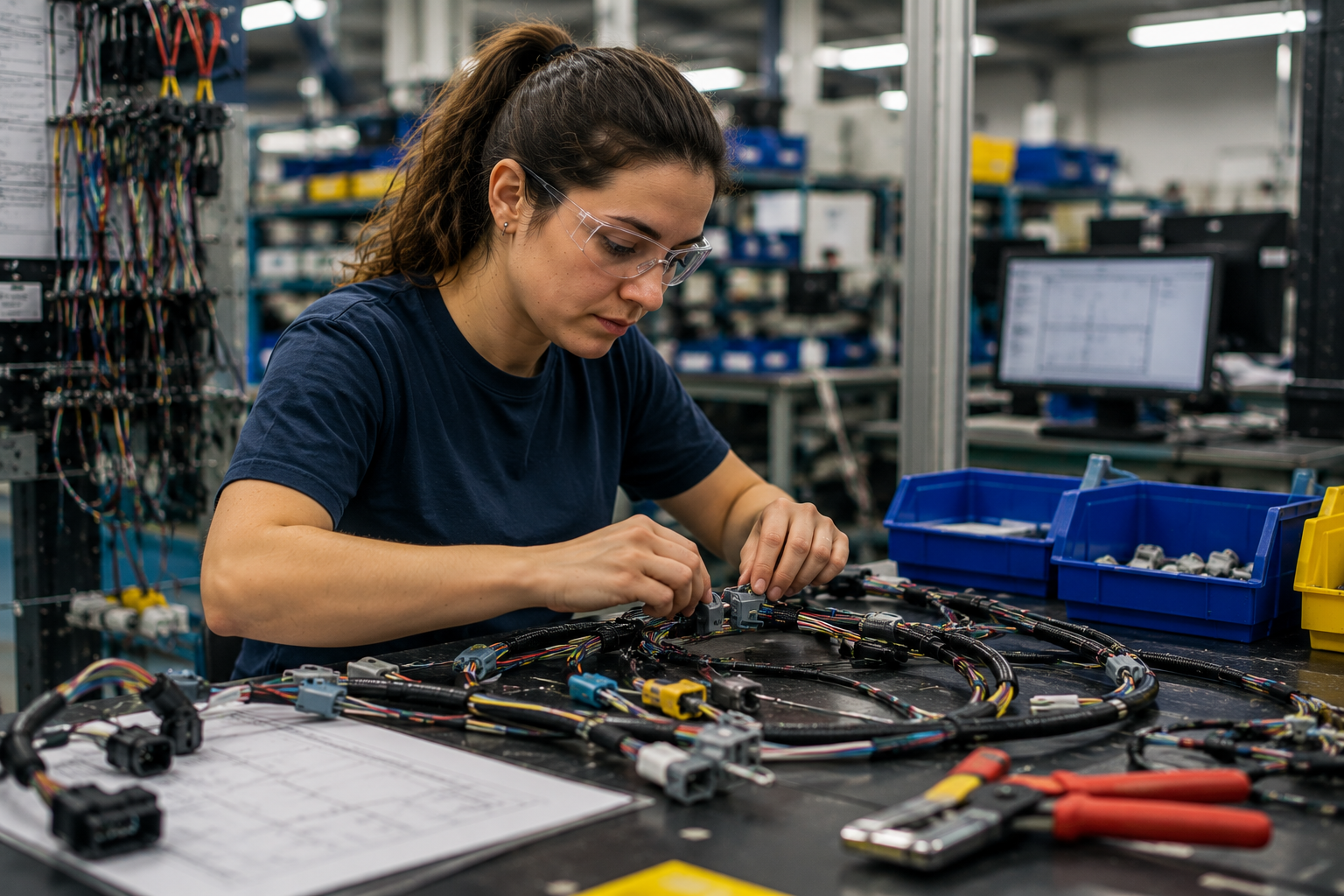
It covers how a component is fitted, in what order steps are performed, what tools are used, how quality is checked, and what a completed job looks like. When those things are defined, work becomes repeatable. When they are not, every operator effectively invents their own version of the job.
In most assembly operations, the reality sits somewhere in the middle. Some processes are documented. Others exist only in the heads of experienced operators. New starters learn by watching whoever is available, which means they absorb both good habits and bad ones. Over time, small differences accumulate into significant variation.
Every assembly operation has variation. The question is how much, where it comes from, and whether it is being managed.
Variation in assembly shows up in several ways. Quality outcomes fluctuate between shifts. Cycle times differ between operators doing the same job. Rework rates spike on certain production runs but not others. Customer complaints arrive in clusters that are difficult to trace back to a root cause.
These are not random events. They are symptoms of processes that have not been fully standardised. When the way work is done depends on individual interpretation rather than a defined method, variability becomes baked into the operation.
The downstream effects are significant. Rework consumes labour. Defects consume materials. Unpredictable cycle times make scheduling unreliable. Inconsistent quality creates customer problems that damage relationships and reputation. And because the variation is gradual and diffuse, it rarely triggers an obvious alarm - it just quietly erodes margin.
Even operations that start with well-documented processes tend to drift over time. An operator develops a shortcut that seems to work. A procedure is updated informally but the documentation is never changed. A new tool is introduced but the work instruction still references the old one. A machine setting shifts slightly and nobody adjusts the standard.
Individually, none of these changes seems significant. Collectively, they move the operation away from its intended baseline. This is process drift, and it happens in almost every assembly environment that does not have active mechanisms to prevent it.
The result is that documented processes no longer reflect what is actually happening on the floor. Audits pass because the paperwork looks right, but the real method has evolved independently. When something goes wrong, it is difficult to diagnose because the documented process and the actual process are no longer the same thing.
One of the most common and least visible risks in assembly manufacturing is the concentration of critical knowledge in a small number of individuals. The experienced operator who knows exactly how tight a fastener needs to be. The team leader who remembers why a particular step was added. The supervisor who can diagnose a quality issue by sight because they have seen it a hundred times.
This knowledge is genuinely valuable. The problem is its location. When it exists only in people rather than in documented, accessible processes, the business is fragile in ways that are easy to underestimate.
When those people are absent, on leave, or eventually leave the business, the knowledge goes with them. New operators take longer to reach competence. Quality becomes dependent on who is rostered on a given shift. And scaling production - adding a new shift, a new line, or a new site, becomes significantly harder because there is no reliable method to replicate.
The case for standardisation is often framed defensively, as a way to prevent problems. That framing is accurate but incomplete. Standardisation is also the foundation of everything an assembly operation needs to grow.
The majority of assembly manufacturers sit in one of two positions. Either their documentation is outdated, created during an ISO audit or a similar process and not maintained since, or their processes are undocumented entirely and exist only in practice.
In both cases, the working method has evolved beyond what is recorded. Operators are following a version of the process that has been shaped by habit, informal instruction, and individual judgement. The organisation believes it has standardised processes. In practice, it has the appearance of standardisation without the substance.
Closing that gap requires more than updating a document. It requires connecting the documented process to the point of work - making accurate, current instructions available to operators where and when they are doing the job, and building mechanisms to keep those instructions aligned with actual practice over time.
This is precisely what HINDSITE is built for. Rather than relying on printed procedures or disconnected spreadsheets, HINDSITE guides work at the point of execution - giving operators the right instruction at the right moment, capturing verification as the job is done, and providing managers with visibility over what has actually been completed. The result is a process that exists in practice, not just on paper.
For most assembly operations, the place to begin is not a comprehensive documentation project. That approach tends to produce large volumes of material that nobody reads.
A more effective starting point is to identify the processes with the highest variability, the most frequent quality issues, or the greatest dependency on specific individuals. Standardise those first. Build the documentation, validate it with operators, make it accessible at the point of work, and measure whether outcomes improve.
That cycle - identify, document, deploy, measure, is the foundation of a standardisation programme that actually changes how work is done rather than simply producing paperwork.
From there, the scope expands. More processes are documented. Existing documentation is reviewed and updated. Operators become participants in the process rather than passive recipients of instructions. The organisation builds the habit of maintaining standards rather than treating them as a one-time exercise.
Standardisation is not a compliance exercise. It is the operating infrastructure that allows an assembly business to deliver consistent quality, develop its people effectively, and grow without introducing proportional risk.
The assembly operations that scale well are not necessarily the ones with the most advanced technology or the lowest labour costs. They are the ones where the method is defined, understood, followed, and continuously improved. Everything else - quality, efficiency, customer outcomes, profitability, follows from that foundation.
HINDSITE's work management platform that ensures the right job gets done, every time. Connect with our team today.
If you run an assembly operation, you already know that getting product out the door is only part of the challenge. The harder part is getting it out the door the same way, every time, regardless of who is working, which shift it is, or how busy the floor happens to be.
That consistency, or the lack of it, is what separates assembly businesses that scale from those that plateau. And at the centre of it is standardisation.
Standardisation is not about rigid bureaucracy or burying operators in paperwork. It means that for any given task, there is a defined, agreed-upon way of doing it — and that method is documented, accessible, and consistently followed.
It covers how a component is fitted, in what order steps are performed, what tools are used, how quality is checked, and what a completed job looks like. When those things are defined, work becomes repeatable. When they are not, every operator effectively invents their own version of the job.
In most assembly operations, the reality sits somewhere in the middle. Some processes are documented. Others exist only in the heads of experienced operators. New starters learn by watching whoever is available, which means they absorb both good habits and bad ones. Over time, small differences accumulate into significant variation.
Every assembly operation has variation. The question is how much, where it comes from, and whether it is being managed.
Variation in assembly shows up in several ways. Quality outcomes fluctuate between shifts. Cycle times differ between operators doing the same job. Rework rates spike on certain production runs but not others. Customer complaints arrive in clusters that are difficult to trace back to a root cause.
These are not random events. They are symptoms of processes that have not been fully standardised. When the way work is done depends on individual interpretation rather than a defined method, variability becomes baked into the operation.
The downstream effects are significant. Rework consumes labour. Defects consume materials. Unpredictable cycle times make scheduling unreliable. Inconsistent quality creates customer problems that damage relationships and reputation. And because the variation is gradual and diffuse, it rarely triggers an obvious alarm - it just quietly erodes margin.
Even operations that start with well-documented processes tend to drift over time. An operator develops a shortcut that seems to work. A procedure is updated informally but the documentation is never changed. A new tool is introduced but the work instruction still references the old one. A machine setting shifts slightly and nobody adjusts the standard.
Individually, none of these changes seems significant. Collectively, they move the operation away from its intended baseline. This is process drift, and it happens in almost every assembly environment that does not have active mechanisms to prevent it.
The result is that documented processes no longer reflect what is actually happening on the floor. Audits pass because the paperwork looks right, but the real method has evolved independently. When something goes wrong, it is difficult to diagnose because the documented process and the actual process are no longer the same thing.
One of the most common and least visible risks in assembly manufacturing is the concentration of critical knowledge in a small number of individuals. The experienced operator who knows exactly how tight a fastener needs to be. The team leader who remembers why a particular step was added. The supervisor who can diagnose a quality issue by sight because they have seen it a hundred times.
This knowledge is genuinely valuable. The problem is its location. When it exists only in people rather than in documented, accessible processes, the business is fragile in ways that are easy to underestimate.
When those people are absent, on leave, or eventually leave the business, the knowledge goes with them. New operators take longer to reach competence. Quality becomes dependent on who is rostered on a given shift. And scaling production - adding a new shift, a new line, or a new site, becomes significantly harder because there is no reliable method to replicate.
The case for standardisation is often framed defensively, as a way to prevent problems. That framing is accurate but incomplete. Standardisation is also the foundation of everything an assembly operation needs to grow.
The majority of assembly manufacturers sit in one of two positions. Either their documentation is outdated, created during an ISO audit or a similar process and not maintained since, or their processes are undocumented entirely and exist only in practice.
In both cases, the working method has evolved beyond what is recorded. Operators are following a version of the process that has been shaped by habit, informal instruction, and individual judgement. The organisation believes it has standardised processes. In practice, it has the appearance of standardisation without the substance.
Closing that gap requires more than updating a document. It requires connecting the documented process to the point of work - making accurate, current instructions available to operators where and when they are doing the job, and building mechanisms to keep those instructions aligned with actual practice over time.
This is precisely what HINDSITE is built for. Rather than relying on printed procedures or disconnected spreadsheets, HINDSITE guides work at the point of execution - giving operators the right instruction at the right moment, capturing verification as the job is done, and providing managers with visibility over what has actually been completed. The result is a process that exists in practice, not just on paper.
For most assembly operations, the place to begin is not a comprehensive documentation project. That approach tends to produce large volumes of material that nobody reads.
A more effective starting point is to identify the processes with the highest variability, the most frequent quality issues, or the greatest dependency on specific individuals. Standardise those first. Build the documentation, validate it with operators, make it accessible at the point of work, and measure whether outcomes improve.
That cycle - identify, document, deploy, measure, is the foundation of a standardisation programme that actually changes how work is done rather than simply producing paperwork.
From there, the scope expands. More processes are documented. Existing documentation is reviewed and updated. Operators become participants in the process rather than passive recipients of instructions. The organisation builds the habit of maintaining standards rather than treating them as a one-time exercise.
Standardisation is not a compliance exercise. It is the operating infrastructure that allows an assembly business to deliver consistent quality, develop its people effectively, and grow without introducing proportional risk.
The assembly operations that scale well are not necessarily the ones with the most advanced technology or the lowest labour costs. They are the ones where the method is defined, understood, followed, and continuously improved. Everything else - quality, efficiency, customer outcomes, profitability, follows from that foundation.