This article is one of our favourites from around the web. We've included an excerpt below but do go and read the original!
Ask any field service manager about their most experienced technician, and you'll usually hear some version of the same thing: they just know things. Which valve on a particular model tends to fail first. Which customer site has an unusual quirk in its wiring. Which fix actually works, even if it's not quite what the manual says. This is tribal knowledge, and it's one of the most valuable, and most fragile, assets a field service business has.
The problem is that tribal knowledge, by definition, lives in people's heads rather than in any system. When an experienced technician retires, moves on, or is simply unavailable, that knowledge doesn't get handed over; it just disappears. For industrial service teams dealing with complex, ageing equipment, this isn't a minor inconvenience. It's a genuine operational risk.
Tribal knowledge in field service tends to fall into a few recognisable categories:
None of this is written down anywhere, which is exactly what makes it valuable and risky at the same time.
An ageing, retiring workforce. Many industrial sectors are facing a wave of retirements among their most experienced technicians, often the very people carrying the most tribal knowledge. Once that person leaves, the knowledge leaves with them, regardless of how long they've been in the role.
Faster technician turnover. Even outside of retirement, technician turnover has increased across many field service industries. Every departure represents a small, uncatalogued loss of institutional knowledge that the business may not even realise is gone until the same problem resurfaces and nobody remembers how it was solved last time.
Growing equipment complexity. As industrial equipment becomes more varied and technically complex, the amount of tacit knowledge required to service it well grows too, making the gap between an experienced technician and a new hire wider and more costly to bridge.
Scaling makes the problem worse, not better. A small, tight-knit team can get by on informal knowledge sharing, because everyone knows everyone. As a team grows, or spreads across multiple sites, that informal network breaks down, and knowledge that used to circulate naturally starts staying isolated with individuals instead.
When tribal knowledge isn't captured, the consequences show up in familiar ways: longer diagnostic times as newer technicians re-learn what an experienced colleague already knew, more repeat visits caused by missed context that would have been obvious to someone with more experience, and inconsistent service quality depending on which technician happens to be assigned to a job.
It also creates a training bottleneck. New technicians often can only learn tribal knowledge by shadowing an experienced colleague directly, which limits how quickly a team can bring new hires up to speed, and puts a ceiling on how fast the business can scale.
1. Capture Knowledge at the Point of Work, Not After the Fact
Asking experienced technicians to sit down and document everything they know rarely works well; most tribal knowledge is contextual and only surfaces when it's actually relevant to a specific job. A far more effective approach is capturing notes, workarounds, and observations directly within the job report at the time the work is done, so the knowledge gets recorded as a natural byproduct of doing the job, not as a separate, easily-skipped task.
2. Attach Knowledge to the Asset, Not the Person
Tribal knowledge is most useful when it's tied to the specific asset it relates to, rather than living in a general knowledge base that's hard to search in the middle of a job. When a note about a quirky valve or an unusual site condition is attached directly to that asset's history, any technician who services it later automatically inherits that context, without needing to track down the person who originally learned it.
3. Make Knowledge Searchable and Accessible in the Field
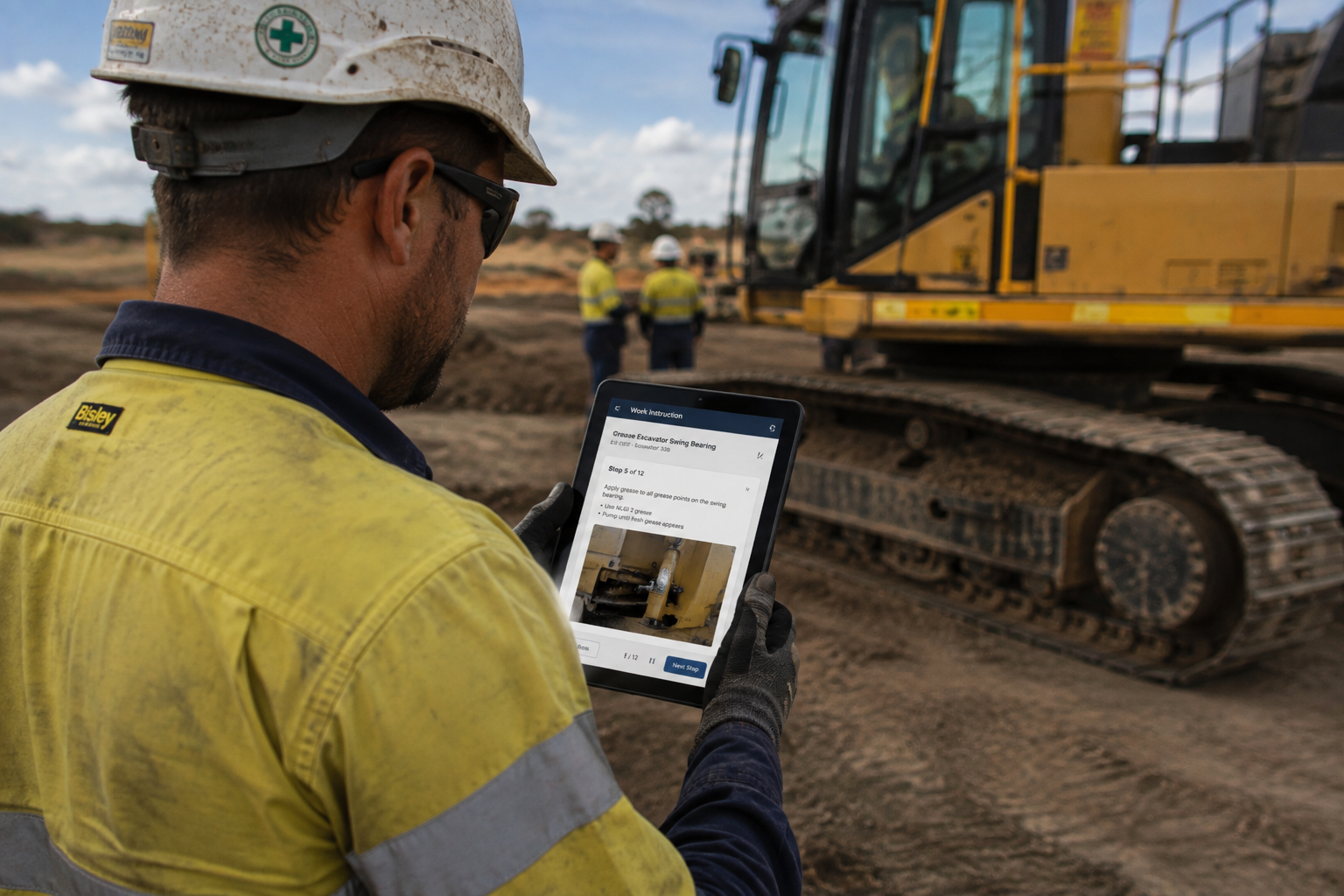
Even well-documented knowledge is only useful if a technician can actually find it while standing in front of the equipment. Mobile access to asset history and prior job notes means a newer technician can benefit from an experienced colleague's insight on the very first visit, not just after years of building up the same experience themselves.
4. Normalise Documentation as Part of the Job, Not Extra Work
Technicians are far more likely to document useful context if doing so is quick and built into their existing workflow, rather than a separate, time-consuming step. Structured, simple prompts within a digital job report (what was tried, what worked, what to watch for next time) make it easy to capture genuinely useful detail without adding meaningful admin time.
5. Review and Surface Patterns Across the Team
Individual notes are valuable, but the real payoff comes from spotting patterns across many technicians and jobs, the same quirk showing up across multiple assets of the same model, for instance. Reviewing job data periodically to identify recurring issues turns individual tribal knowledge into shared, organisation-wide insight, which is far more resilient than knowledge held by any one person.
This is where a connected platform makes a meaningful difference. HINDSITE keeps job notes, asset history, and technician observations attached directly to each asset's record, so knowledge that would otherwise stay locked in one technician's head becomes visible and searchable for the whole team, both at the moment it's needed on-site and when reviewing patterns across the fleet later.
Tribal knowledge isn't a problem to eliminate; the experience and pattern recognition that skilled technicians build up over years is genuinely valuable, and no system replaces the judgement that comes with real field experience. The goal is to stop that knowledge from being trapped in individual people, so it becomes something the whole business benefits from, rather than something that quietly disappears every time someone leaves.
Teams that build simple, low-friction ways to capture this knowledge as work happens, rather than trying to document it after the fact, end up far more resilient to turnover, and far better equipped to bring new technicians up to speed quickly.
HINDSITE's work management platform that ensures the right job gets done, every time. Connect with our team today.
Ask any field service manager about their most experienced technician, and you'll usually hear some version of the same thing: they just know things. Which valve on a particular model tends to fail first. Which customer site has an unusual quirk in its wiring. Which fix actually works, even if it's not quite what the manual says. This is tribal knowledge, and it's one of the most valuable, and most fragile, assets a field service business has.
The problem is that tribal knowledge, by definition, lives in people's heads rather than in any system. When an experienced technician retires, moves on, or is simply unavailable, that knowledge doesn't get handed over; it just disappears. For industrial service teams dealing with complex, ageing equipment, this isn't a minor inconvenience. It's a genuine operational risk.
Tribal knowledge in field service tends to fall into a few recognisable categories:
None of this is written down anywhere, which is exactly what makes it valuable and risky at the same time.
An ageing, retiring workforce. Many industrial sectors are facing a wave of retirements among their most experienced technicians, often the very people carrying the most tribal knowledge. Once that person leaves, the knowledge leaves with them, regardless of how long they've been in the role.
Faster technician turnover. Even outside of retirement, technician turnover has increased across many field service industries. Every departure represents a small, uncatalogued loss of institutional knowledge that the business may not even realise is gone until the same problem resurfaces and nobody remembers how it was solved last time.
Growing equipment complexity. As industrial equipment becomes more varied and technically complex, the amount of tacit knowledge required to service it well grows too, making the gap between an experienced technician and a new hire wider and more costly to bridge.
Scaling makes the problem worse, not better. A small, tight-knit team can get by on informal knowledge sharing, because everyone knows everyone. As a team grows, or spreads across multiple sites, that informal network breaks down, and knowledge that used to circulate naturally starts staying isolated with individuals instead.
When tribal knowledge isn't captured, the consequences show up in familiar ways: longer diagnostic times as newer technicians re-learn what an experienced colleague already knew, more repeat visits caused by missed context that would have been obvious to someone with more experience, and inconsistent service quality depending on which technician happens to be assigned to a job.
It also creates a training bottleneck. New technicians often can only learn tribal knowledge by shadowing an experienced colleague directly, which limits how quickly a team can bring new hires up to speed, and puts a ceiling on how fast the business can scale.
1. Capture Knowledge at the Point of Work, Not After the Fact
Asking experienced technicians to sit down and document everything they know rarely works well; most tribal knowledge is contextual and only surfaces when it's actually relevant to a specific job. A far more effective approach is capturing notes, workarounds, and observations directly within the job report at the time the work is done, so the knowledge gets recorded as a natural byproduct of doing the job, not as a separate, easily-skipped task.
2. Attach Knowledge to the Asset, Not the Person
Tribal knowledge is most useful when it's tied to the specific asset it relates to, rather than living in a general knowledge base that's hard to search in the middle of a job. When a note about a quirky valve or an unusual site condition is attached directly to that asset's history, any technician who services it later automatically inherits that context, without needing to track down the person who originally learned it.
3. Make Knowledge Searchable and Accessible in the Field
Even well-documented knowledge is only useful if a technician can actually find it while standing in front of the equipment. Mobile access to asset history and prior job notes means a newer technician can benefit from an experienced colleague's insight on the very first visit, not just after years of building up the same experience themselves.
4. Normalise Documentation as Part of the Job, Not Extra Work
Technicians are far more likely to document useful context if doing so is quick and built into their existing workflow, rather than a separate, time-consuming step. Structured, simple prompts within a digital job report (what was tried, what worked, what to watch for next time) make it easy to capture genuinely useful detail without adding meaningful admin time.
5. Review and Surface Patterns Across the Team
Individual notes are valuable, but the real payoff comes from spotting patterns across many technicians and jobs, the same quirk showing up across multiple assets of the same model, for instance. Reviewing job data periodically to identify recurring issues turns individual tribal knowledge into shared, organisation-wide insight, which is far more resilient than knowledge held by any one person.
This is where a connected platform makes a meaningful difference. HINDSITE keeps job notes, asset history, and technician observations attached directly to each asset's record, so knowledge that would otherwise stay locked in one technician's head becomes visible and searchable for the whole team, both at the moment it's needed on-site and when reviewing patterns across the fleet later.
Tribal knowledge isn't a problem to eliminate; the experience and pattern recognition that skilled technicians build up over years is genuinely valuable, and no system replaces the judgement that comes with real field experience. The goal is to stop that knowledge from being trapped in individual people, so it becomes something the whole business benefits from, rather than something that quietly disappears every time someone leaves.
Teams that build simple, low-friction ways to capture this knowledge as work happens, rather than trying to document it after the fact, end up far more resilient to turnover, and far better equipped to bring new technicians up to speed quickly.