This article is one of our favourites from around the web. We've included an excerpt below but do go and read the original!
Every industrial service team is chasing the same outcomes: faster response times, higher first-time fix rates, and lower operating costs. But getting there rarely comes down to one big fix. It's usually a handful of operational changes that compound over time.
Below are 10 practical, proven ways to improve field service operations, whether you're running a five-person crew or coordinating hundreds of technicians across multiple sites.
If work orders live across email, paper tickets, and someone's memory, things get lost. Centralising every work order, from creation and assignment through to status updates and completion notes, in a single system gives dispatchers, technicians, and managers the same real-time picture of what's happening in the field. It also creates a clean audit trail, which matters when you need to answer "what happened on this job" six months later.
Manual scheduling tends to default to "whoever's free," not "whoever's best suited for the job." Smarter dispatch takes into account technician skill sets, certifications, location, and current workload, reducing windshield time and getting the right person to the right job the first time. Even modest improvements in routing and assignment logic can meaningfully cut fuel costs and daily job counts per tech.
Every piece of equipment has a story: when it was installed, serviced, repaired, and by whom. Without a centralised asset history, technicians show up to jobs blind, re-diagnosing problems that were already documented on a previous visit. Maintaining detailed, searchable asset records turns every service call into an opportunity to build institutional knowledge rather than start from scratch.
Inconsistent inspections lead to inconsistent results, and in regulated industries, inconsistent compliance. Standardised digital checklists ensure every technician captures the same information, in the same format, every time. This doesn't just protect you during audits; it also makes it far easier to compare performance and spot recurring equipment issues across sites.
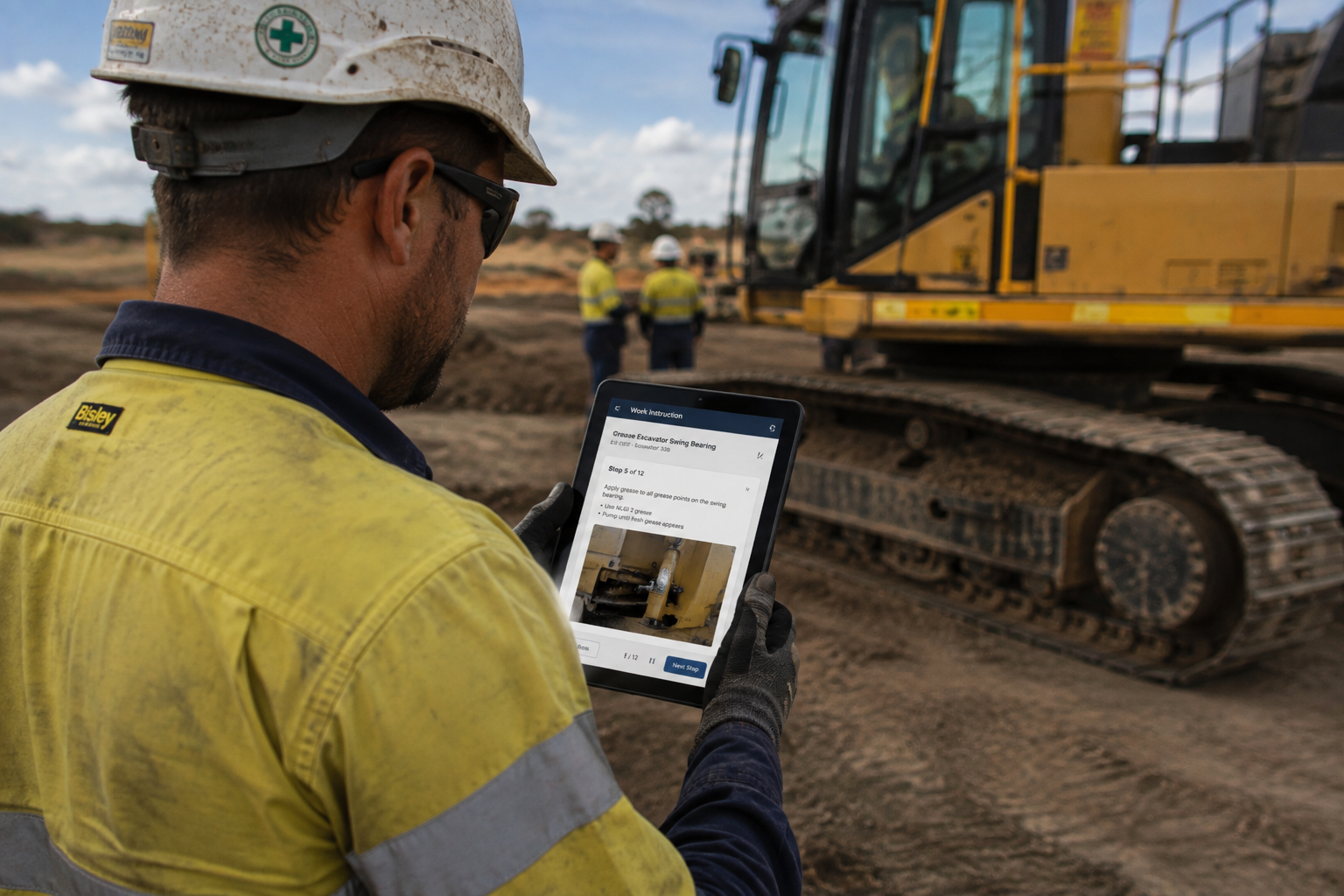
Technicians who have to call the office for a manual, a part number, or a customer history lose time on every job. Mobile access to work orders, asset histories, manuals, and forms lets field staff work independently, update job status in real time, and capture signatures or photos on-site, even in areas with limited connectivity, which is common on industrial job sites.
First-time fix rate is one of the clearest indicators of field service health: every repeat visit costs money and erodes trust. Improving it usually comes down to three things: technicians arriving with accurate diagnostic information, the right parts on the truck, and access to prior service history for that specific asset. Addressing any one of these gaps tends to move the number meaningfully.
If the same piece of equipment keeps failing, or the same type of job keeps running long, that's a pattern worth investigating, but only if you're capturing the data to see it. Reporting on metrics like repeat visits, average job duration, and equipment failure frequency turns scattered anecdotes into a clear list of where to focus preventive maintenance or additional training.
Reactive maintenance, waiting for equipment to fail before servicing it, is almost always more expensive than a planned inspection or repair. Using asset history and inspection data to flag equipment that's due for service before it breaks down reduces unplanned downtime and extends the useful life of expensive machinery.
A lot of inefficiency in field service operations comes down to information not reaching the people who need it: a part shortage the office didn't know about, a schedule change the technician didn't see, a customer note that got lost. Real-time syncing between field and office teams closes these gaps, so decisions are made with current information instead of yesterday's.
None of the above sticks without regular review. Set a small set of core metrics, such as first-time fix rate, average response time, technician utilisation, and repeat visit rate, and actually look at them on a set cadence. Teams that treat reporting as a monthly habit, not a once-a-year exercise, tend to catch problems while they're still small and cheap to fix.
Individually, these changes each chip away at cost and inefficiency. Together, they compound: better scheduling reduces windshield time, which frees up capacity, which improves response time, which improves customer satisfaction. Most of these improvements also share a common foundation, having a connected system where work orders, asset histories, inspections, and reporting all live in one place, instead of scattered across paper, spreadsheets, and phone calls.
That's the role a platform like HINDSITE plays, giving industrial service teams a single source of truth for scheduling, work orders, asset tracking, and inspections, so these ten improvements aren't a one-time project but a built-in part of how the team operates day to day.
HINDSITE's work management platform that ensures the right job gets done, every time. Connect with our team today.
Every industrial service team is chasing the same outcomes: faster response times, higher first-time fix rates, and lower operating costs. But getting there rarely comes down to one big fix. It's usually a handful of operational changes that compound over time.
Below are 10 practical, proven ways to improve field service operations, whether you're running a five-person crew or coordinating hundreds of technicians across multiple sites.
If work orders live across email, paper tickets, and someone's memory, things get lost. Centralising every work order, from creation and assignment through to status updates and completion notes, in a single system gives dispatchers, technicians, and managers the same real-time picture of what's happening in the field. It also creates a clean audit trail, which matters when you need to answer "what happened on this job" six months later.
Manual scheduling tends to default to "whoever's free," not "whoever's best suited for the job." Smarter dispatch takes into account technician skill sets, certifications, location, and current workload, reducing windshield time and getting the right person to the right job the first time. Even modest improvements in routing and assignment logic can meaningfully cut fuel costs and daily job counts per tech.
Every piece of equipment has a story: when it was installed, serviced, repaired, and by whom. Without a centralised asset history, technicians show up to jobs blind, re-diagnosing problems that were already documented on a previous visit. Maintaining detailed, searchable asset records turns every service call into an opportunity to build institutional knowledge rather than start from scratch.
Inconsistent inspections lead to inconsistent results, and in regulated industries, inconsistent compliance. Standardised digital checklists ensure every technician captures the same information, in the same format, every time. This doesn't just protect you during audits; it also makes it far easier to compare performance and spot recurring equipment issues across sites.
Technicians who have to call the office for a manual, a part number, or a customer history lose time on every job. Mobile access to work orders, asset histories, manuals, and forms lets field staff work independently, update job status in real time, and capture signatures or photos on-site, even in areas with limited connectivity, which is common on industrial job sites.
First-time fix rate is one of the clearest indicators of field service health: every repeat visit costs money and erodes trust. Improving it usually comes down to three things: technicians arriving with accurate diagnostic information, the right parts on the truck, and access to prior service history for that specific asset. Addressing any one of these gaps tends to move the number meaningfully.
If the same piece of equipment keeps failing, or the same type of job keeps running long, that's a pattern worth investigating, but only if you're capturing the data to see it. Reporting on metrics like repeat visits, average job duration, and equipment failure frequency turns scattered anecdotes into a clear list of where to focus preventive maintenance or additional training.
Reactive maintenance, waiting for equipment to fail before servicing it, is almost always more expensive than a planned inspection or repair. Using asset history and inspection data to flag equipment that's due for service before it breaks down reduces unplanned downtime and extends the useful life of expensive machinery.
A lot of inefficiency in field service operations comes down to information not reaching the people who need it: a part shortage the office didn't know about, a schedule change the technician didn't see, a customer note that got lost. Real-time syncing between field and office teams closes these gaps, so decisions are made with current information instead of yesterday's.
None of the above sticks without regular review. Set a small set of core metrics, such as first-time fix rate, average response time, technician utilisation, and repeat visit rate, and actually look at them on a set cadence. Teams that treat reporting as a monthly habit, not a once-a-year exercise, tend to catch problems while they're still small and cheap to fix.
Individually, these changes each chip away at cost and inefficiency. Together, they compound: better scheduling reduces windshield time, which frees up capacity, which improves response time, which improves customer satisfaction. Most of these improvements also share a common foundation, having a connected system where work orders, asset histories, inspections, and reporting all live in one place, instead of scattered across paper, spreadsheets, and phone calls.
That's the role a platform like HINDSITE plays, giving industrial service teams a single source of truth for scheduling, work orders, asset tracking, and inspections, so these ten improvements aren't a one-time project but a built-in part of how the team operates day to day.